Structured Debrief Protocols for Engineering Interview Panels
Systematic debrief structure eliminates bias where loose deliberation amplifies it.
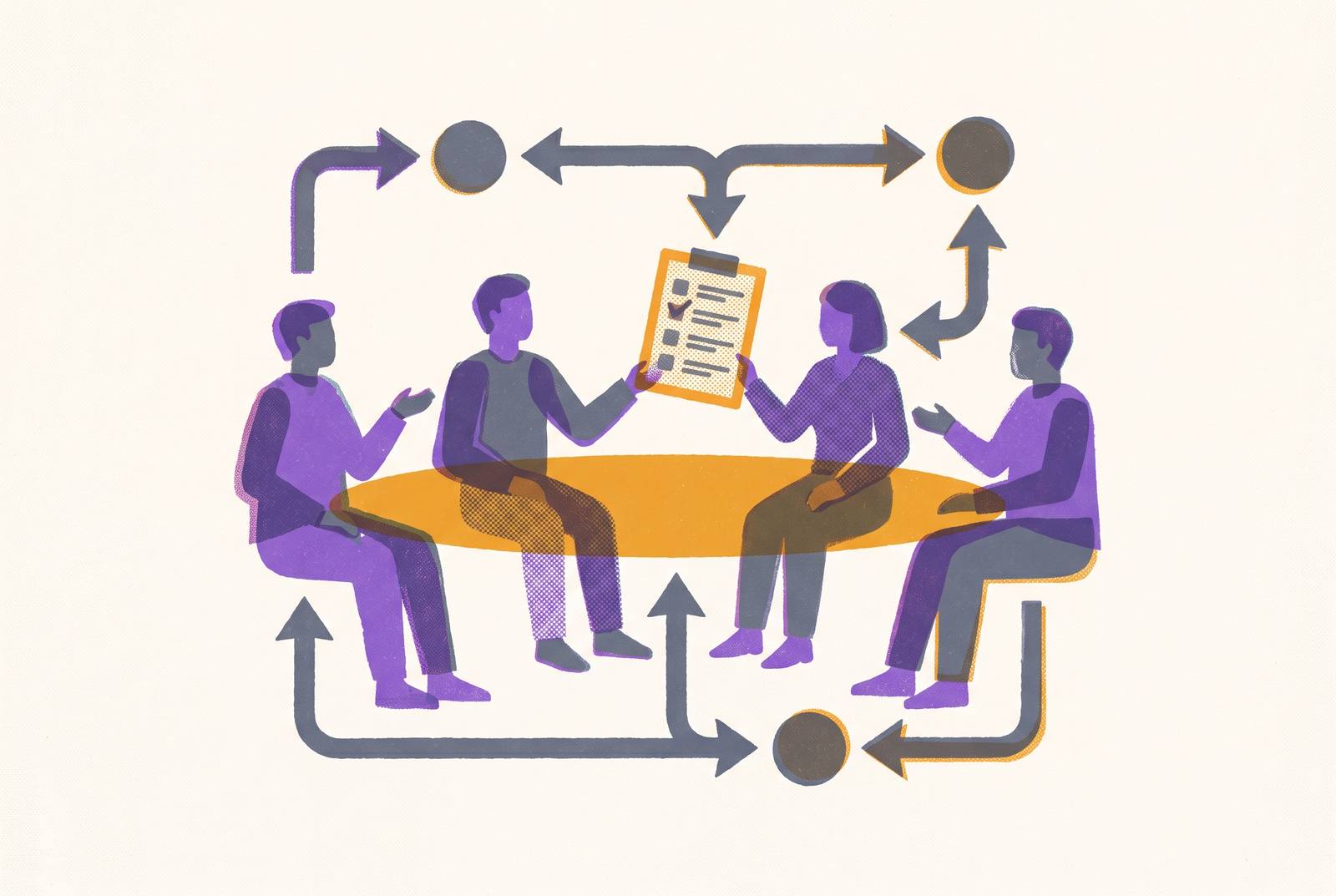
Ninety minutes after the last candidate walked out, four engineers are sitting in a room, arguing about whether a shaky answer on the system design question matters more than a strong pairing session, and the loudest voice in the room wins because it spoke with the most certainty. That's the debrief most engineering teams run, and they call it a formality, a place to confirm what the panel already suspected walking in.
That reading misses what the meeting is actually for. Calibration and debrief are two different jobs, and they fail in different ways. Calibration aligns the rubric and the scoring scale across the whole panel before anyone sits down with a candidate. The debrief applies that rubric to one specific person, promptly after the last interview ends. When calibration has been done well ahead of time, the debrief turns into a short, almost boring decision meeting: scores go up, evidence gets compared, a call gets made. When calibration has been skipped, the debrief becomes a negotiation, and interpretation fills the space where evidence should be.
The failure mode is predictable once you see it. Without a shared rubric set in advance, scorecards still get filled in, but the words on them mean different things to different interviewers. Debriefs turn into arguments about what a score meant rather than discussions of what happened in the room, and hire quality starts to depend more on which four people happened to be on the panel than on which candidate actually walked through the door.
That's the frame for everything that follows. Every mechanical choice inside a debrief, when scorecards get submitted, in what order people speak, how tightly the rubric is anchored before anyone opens their mouth, either actively suppresses the biases that group evaluation amplifies, or it quietly lets them run the room.
The biases a panel naturally amplifies, and structure as their counter
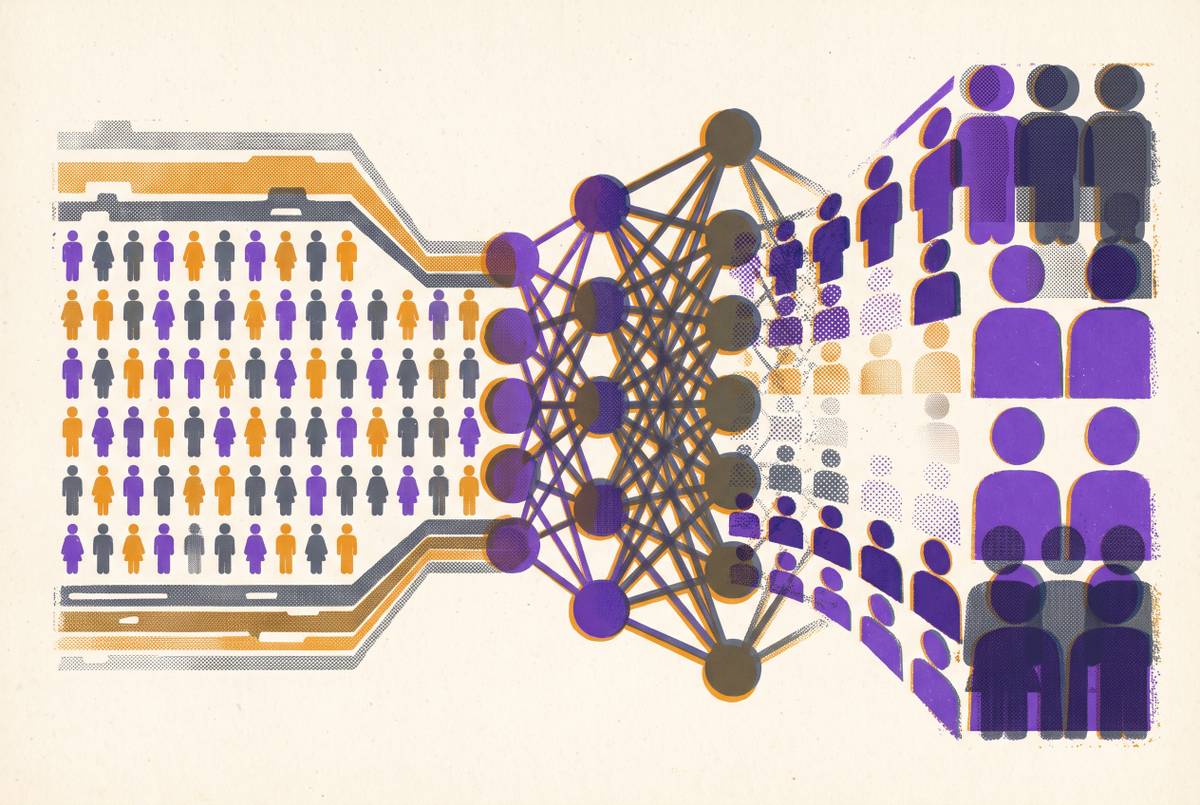
Put a group of smart, well-intentioned engineers in a room to evaluate a candidate together, and the group does not average out their individual blind spots. It compounds them. Three mechanisms account for most of what goes wrong.
Anchoring is the first. When the hiring manager or the most senior engineer on the panel speaks first, every voice that follows starts calibrating to that position instead of to its own independent read of the candidate. Rank in the room functions as an anchor point, and once a senior voice has said "strong hire," the conversation that follows tends to build a case for that conclusion rather than test it.
Halo bias is the second. A great answer about distributed systems trade-offs quietly inflates the panel's read on that same candidate's communication skills, or their ownership, or their debugging instincts, none of which the system design question actually tested.
Conformity bias does the most damage. The panel converges, but it converges on social pressure, not on what anyone actually observed.
None of this reflects a personality defect in any one engineer. These are predictable features of unstructured group deliberation. Fixing them takes procedure, not awareness training. Structure is what closes that gap, and the countermeasures that work are mechanical: written independent scoring before any discussion starts, a fixed order for who speaks when, a rubric locked in before the loop even begins. Each targets one specific bias pathway. None of them depend on anyone in the room being more self-aware than usual.
What calibration requires before the first interview runs
A debrief can only produce a decision worth trusting if the panel agreed, before the first candidate ever walked in, on what they're measuring and what each score actually means. That agreement is calibration, and it happens at a pre-loop kickoff, not inside the debrief itself. The debrief applies a rubric. It does not build one.
A rubric that works ties its criteria to outcomes the team actually cares about shipping. DORA's 2024 Accelerate State of DevOps Report found that only a small share of teams reach the "Elite" tier: deploy-on-demand cadence, lead times under one day, a low change-failure rate, and a mean time to recover under one hour. A rubric worth using probes for the behaviors that actually produce those outcomes instead of a general sense of whether someone sounds sharp.
Whether a rubric is actually shared, rather than just written down, can be tested. Test it. If their scores converge, the rubric means the same thing to everyone reading it. Scores that scatter mean the words on the page are being interpreted differently by different people, a gap that will appear again in every live debrief until someone fixes the rubric itself.
Bar drift is the quieter failure, and it compounds without anyone noticing. Periodic recalibration sessions are what surface this drift before it degrades the whole hiring bar.
There's also an operational tell that calibration is breaking down in real time: scorecard submission rates. When submission rates drop below 90%, interviewers walk into the debrief without an independent position to defend. Interviewers who don't complete scorecards before the debrief walk into the room with no independent position to defend, and that leaves them maximally exposed to anchoring from whoever happens to speak first.
For early-stage and growth-stage teams specifically, calibration has to resolve one more tension directly. The rubric needs to encode that distinction before the pressure to fill an open seat quietly erodes it.
The four interview formats that produce scoreable signal worth debriefing
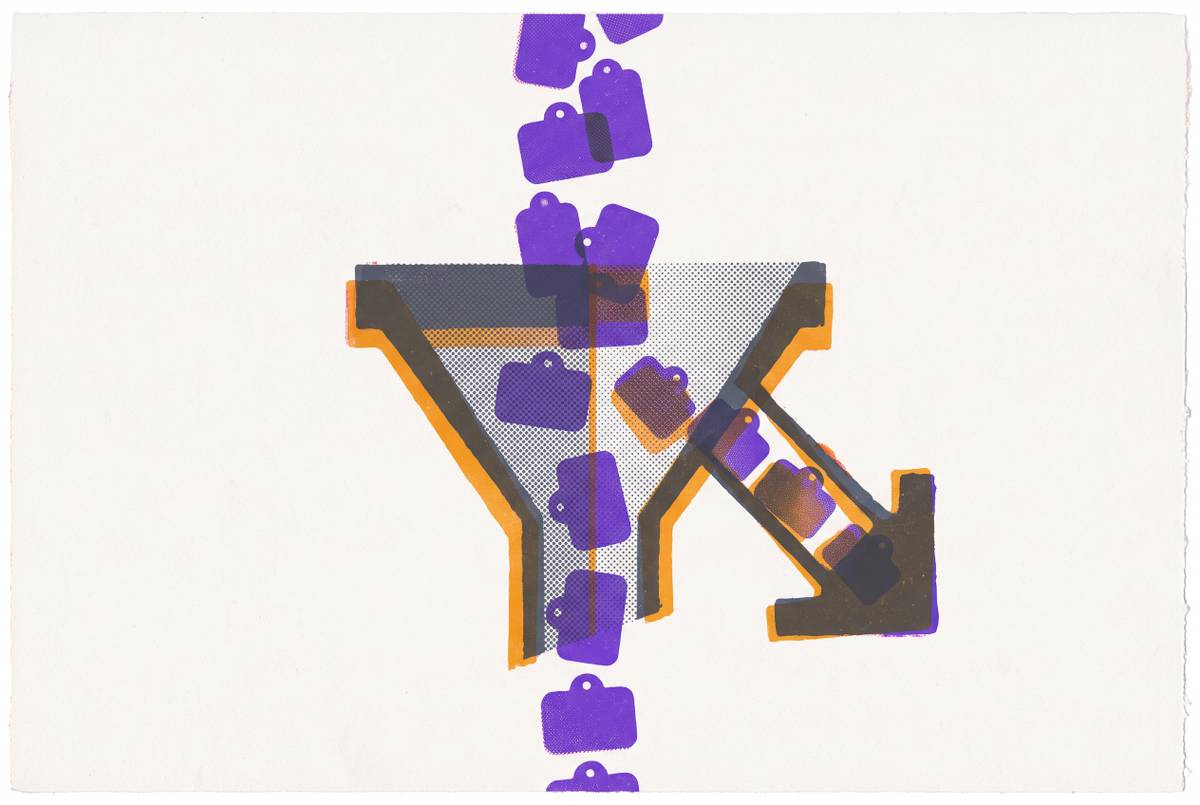
A debrief struggles for a simple reason sometimes: the formats upstream of it never generated real signal to begin with. You can run the tightest debrief protocol in the world and still end up arguing about nothing, because what the panel actually has to work with is thin.
Four formats carry documented predictive validity: a work-sample exercise, a structured behavioral interview, a live pair-programming session, and a system-design discussion. The numbers make the case bluntly. Years of experience alone is r = 0.18. That gap between a structured loop and a loose, vibes-based conversation is the gap between predicting a meaningful share of someone's actual job performance and predicting almost none of it.
Each format should map cleanly to one rubric dimension. System design maps to architectural judgment and trade-off reasoning. Pair programming maps to collaboration style and debugging approach. Behavioral interviews map to ownership and adaptability. Work samples map to the actual output quality the team will depend on day to day. When a panel can't agree on what a given round was even supposed to measure, the debrief has nowhere solid to stand. Picture four interviewers arguing over a brainteaser answer, debating whether a clever but irrelevant riddle response says anything real about the candidate. It doesn't, and the time spent litigating it in the debrief is time the panel isn't spending on the signal that actually predicts performance.
Panel structure compounds the validity of good formats further. Shared observation, multiple people watching the same answer to the same question at the same time, is the core advantage panels have over a string of serial one-on-one rounds.
There's a practical ceiling here too. The rule of four holds: four interviewers reach 86% predictive reliability, adding more people past that raises accuracy by less than one percent each additional interviewer, and the debrief's job is to get four people to agree on what they actually saw rather than to reconcile an ever-growing pile of conflicting impressions.
One more format consideration has become close to mandatory for engineering roles in 2026: identity and work verification before the loop even runs. A substantial share of candidates across all roles were flagged for AI-assisted cheating in 2026 interview data, with technical candidates approaching nearly one in two, and technical roles cheating at roughly four times the rate seen in sales roles. That number changes what the first four formats are even measuring, which the next section takes on directly.
The mechanics inside the debrief that suppress rather than amplify group bias
Every choice inside the debrief room, when scorecards get submitted, what order people speak in, who controls the agenda, is either suppressing bias or amplifying it. There's no neutral setting.
Independent scorecard submission before the meeting starts is the first non-negotiable gate. It blocks anchoring and after-the-fact rationalization by guaranteeing every panelist walks into the room already holding a recorded position, one they committed to before hearing a single other opinion. The 24-hour rule backs this up: scorecards should go in within a day of the interview, before memory fades and before any hallway chat shapes what gets written down. A scorecard filled out after an informal corridor conversation has already been contaminated by somebody else's opinion.
Voice ordering is where conformity bias gets suppressed directly. The lowest-tenure interviewer on the panel reads their evidence-based recommendation first. Picture the alternative: the hiring manager opens the meeting with "I thought she was a strong hire," and watch what happens to the junior engineer who flagged a real concern about her debugging approach. The flag survives.
Role separation matters here too. Blur those two roles and administrative process starts crowding out actual judgment.
Every interviewer reads their evidence-based recommendation aloud before any open discussion starts. The discussion that follows should resolve genuine disagreements between positions already on the record, rather than let the group form positions live, through social negotiation, in real time.
The whole meeting runs 30 to 45 minutes, with exactly one output: a hire or no-hire decision, with the reasoning written down. If debriefs routinely end without a clear call, the loop or the rubric is broken, and the rate of clear calls functions as the operational test of whether the protocol is doing its job. Speed discipline reinforces all of this. A fast, structured debrief is what makes a sub-one-week offer timeline realistic. Drawn-out deliberation does two things at once: it gives competing employers time to make a move, and it gives the panel time to rationalize a position instead of deciding one.
How AI-assisted cheating has changed what a debrief evaluates
Everything above assumes the evidence coming into the debrief reflects what the candidate can actually do. That assumption no longer holds the way it used to, because generative AI has made polished, structurally sound answers available to candidates who don't have the underlying skill to back them up.
Roughly two in five technical candidates were flagged for AI-assisted cheating behavior in 2026 interview data, and technical roles cheat at close to four times the rate seen in sales roles. The signal the debrief exists to evaluate has been degraded before it ever reaches the panel.
The false-positive risk has a specific shape to it. A candidate who produces a clean, textbook-correct answer in real time might be demonstrating something real, or might be demonstrating a skill at prompting an AI tool well. A debrief that takes that answer at face value, without distinguishing between the two, scores the wrong thing.
The scale of what false confidence looks like has a real example attached to it. Every structured safeguard in the interview loop had produced complete, unearned confidence.
Countermeasures that actually work operate at the format level, not just inside the debrief. Drilling into specific failure cases, asking something like "Tell me about a specific time you applied that and it failed," exposes gaps that AI-assisted answers tend not to cover well, because models still struggle with rapid context switching and with requests for a specific, personal, negative experience. Work-sample exercises and short proof-of-work tasks run under verifiable conditions cut through AI-polished presentation in a way that structured behavioral questions alone can't manage. Those are what give the debrief something real to work from.
What this means for the debrief itself: panelists need to be explicitly told, as part of calibration, to treat fluency and polish as neutral signals rather than positive ones, and to weight verifiable evidence of actual work over how well someone performed in the interview room. Identity verification before the loop runs has gone from an edge-case precaution to standard practice for engineering roles in 2026.
Where AI tooling helps and distorts the debrief
AI tools now sit on both sides of the debrief, and the distinction between where they help and where they distort matters as much as the calibration protocol itself. On the useful side, transcription and note-capture tools free interviewers to actually watch the candidate work instead of splitting attention between the conversation and a notepad, which should, in principle, produce a more complete scorecard to bring into the debrief. Tools that flag inconsistencies between a candidate's stated experience and their live performance can also sharpen the specific-failure-case questions the previous section described, giving panelists a concrete thread to pull on.
The distortion risk sits in the same place the cheating risk does: a tool that summarizes or scores an interview transcript is still working from the same polished, possibly AI-assisted answers that made the raw signal unreliable in the first place. A summarization tool cannot tell whether a candidate reasoned through a hard problem or reproduced a fluent answer they didn't generate. Feeding that summary into a debrief without the panel knowing how much weight to give it risks reintroducing the exact bias the structured protocol was built to suppress, just with an AI-generated gloss of objectivity sitting on top of it. The protocol that matters is the one that treats any AI-assisted summary as a starting point for the panel's own independent scoring, never as a substitute for it.