How Training Data Encodes Historical Hiring Bias in AI Models
AI hiring models learn and replicate the biases baked into past hiring decisions.
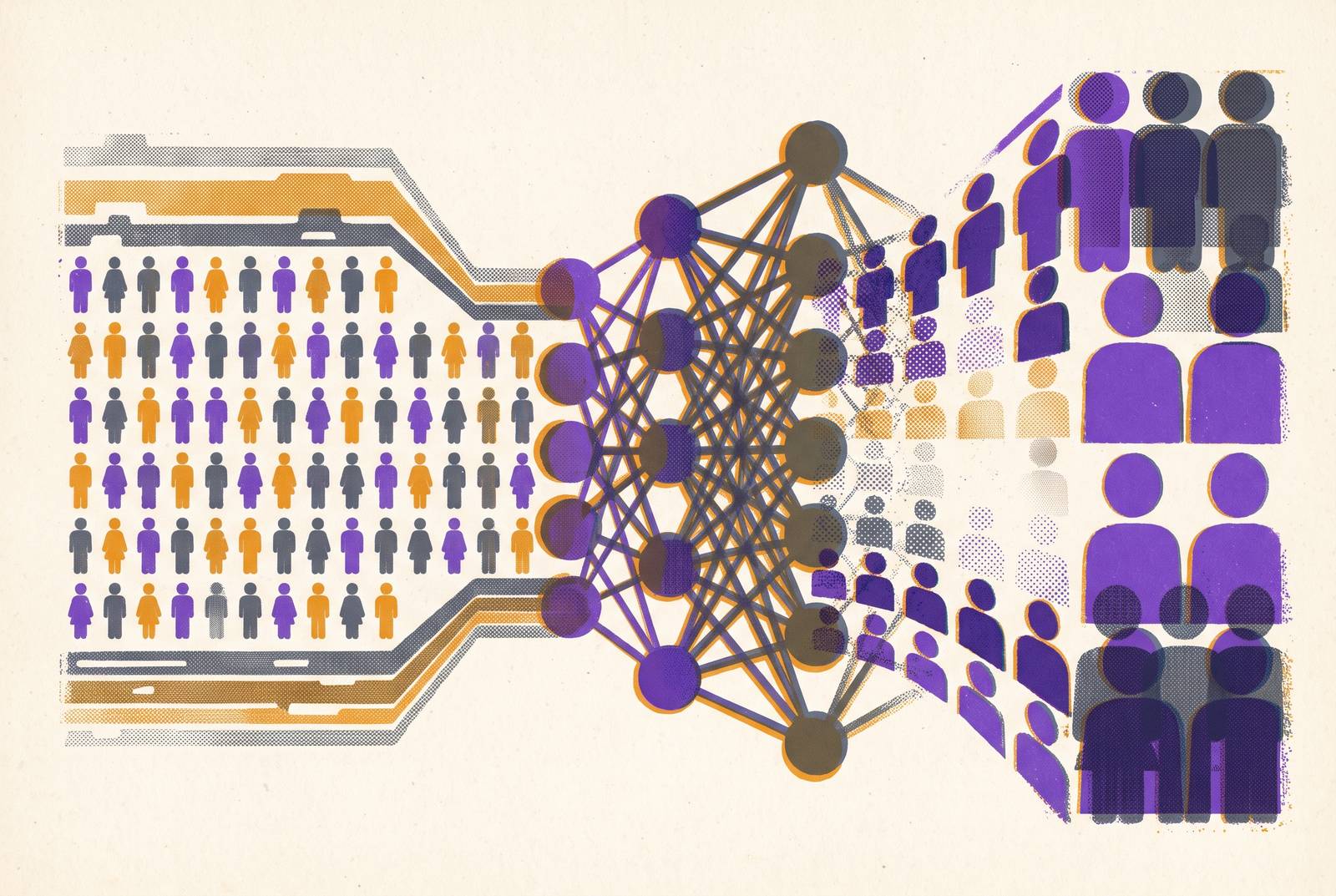
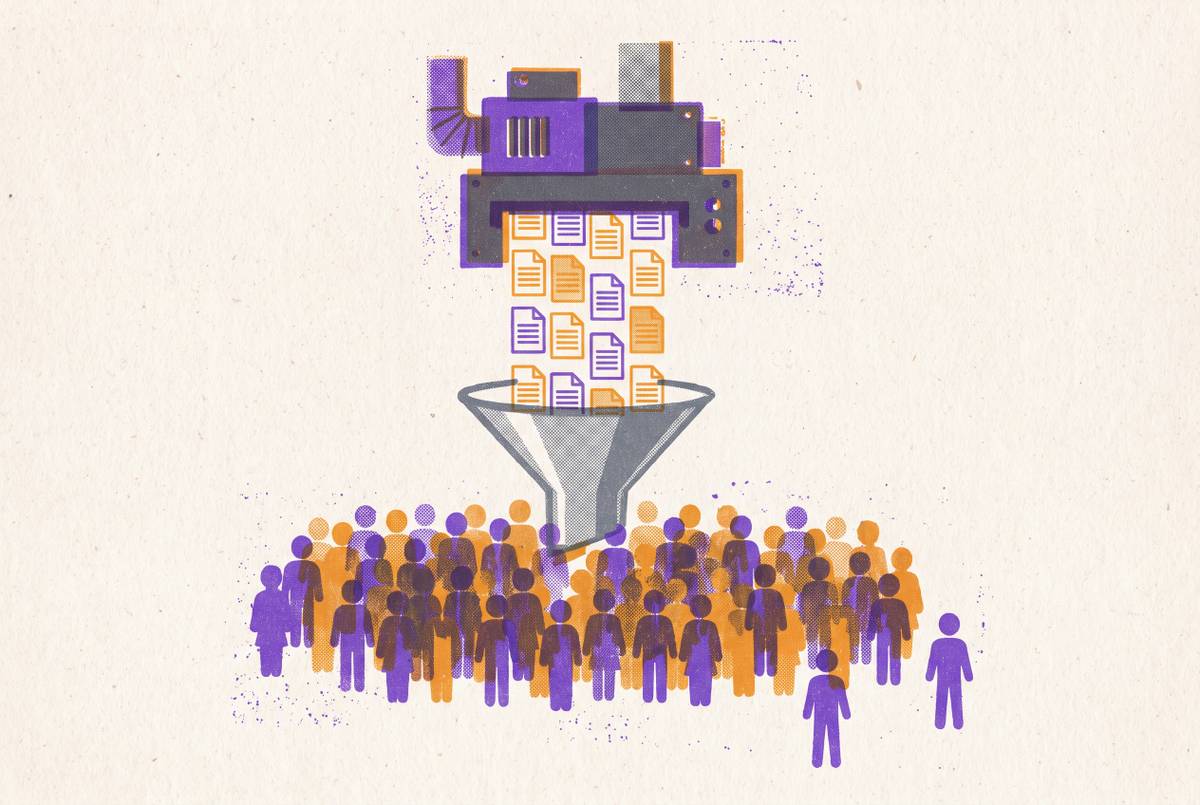
An AI hiring model doesn't invent its opinions about candidates. It learns them, from records of who a company hired before, who got promoted, who lasted. That data is a fossil record of human judgment. It's a fossil record of human judgment, and every judgment call a hiring manager made years ago (fair or not) gets treated as ground truth once it's fed into a training set. The model can't tell "this person was good at the job" from "this person looked like the kind of person we usually hire."" Left alone, it will treat both as the same signal.
Why removing demographic fields does not remove the bias
The obvious fix seems simple enough: strip out name, gender, race, age before training even starts. Problem solved, right?
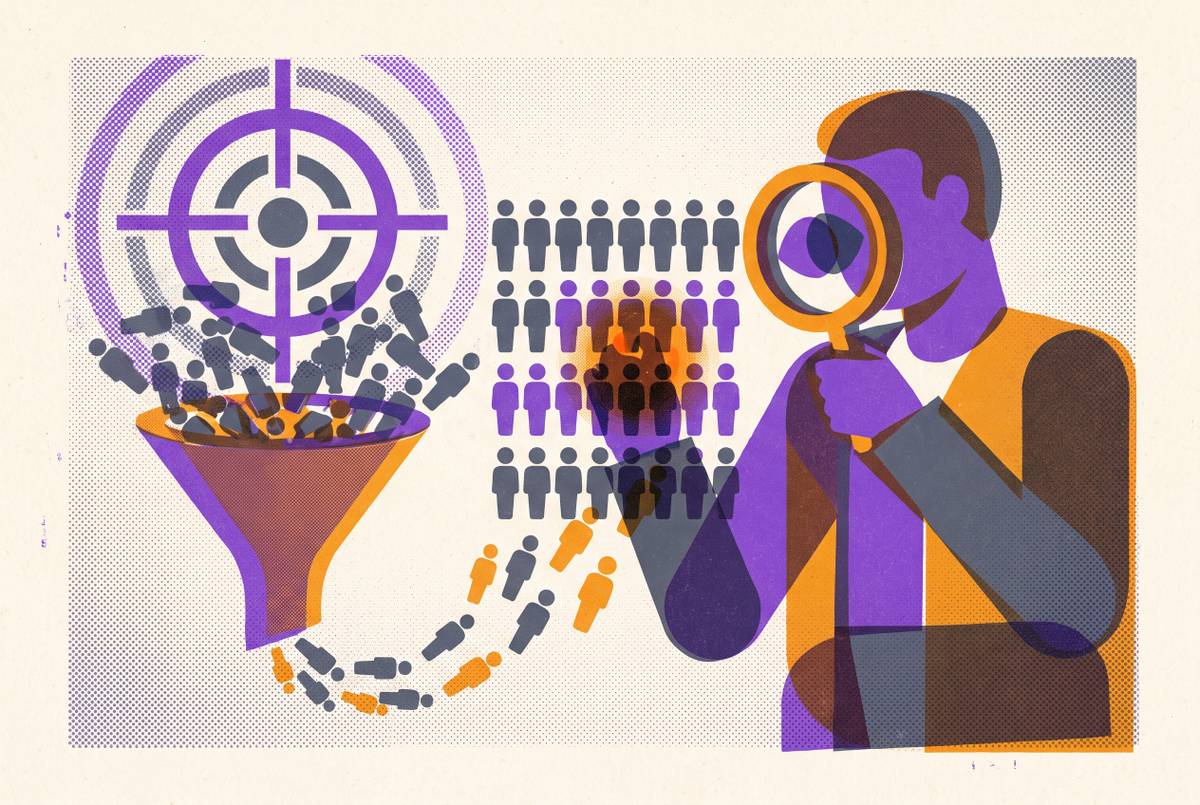
Not quite. This is where proxy discrimination comes in, and it's a much slipperier problem than it sounds. A proxy is a variable that looks perfectly neutral on its own but quietly correlates with a protected characteristic anyway. Removing the demographic field lets the proxy step in to do the same job.
A few are worth knowing by name.
ZIP code. Neighborhoods in the US remain heavily segregated by race, so ZIP code can serve as a strong proxy for race even when the demographic field itself has been removed. School name. Which university someone attended tracks socioeconomic background closely, often more reliably than credentials alone might suggest. Employment gaps. A continuous work history looks great on paper, but caregivers, and disproportionately women, take breaks that appear in records as "gaps" the model reads as a red flag. Job title sequences. The path someone's career took, promotion by promotion, title by title, reflects the cumulative effects of labor market patterns that a model can absorb and replicate.
None of these fields say "race" or "gender" anywhere on them. That's why they survive the scrub. A model doesn't need to see the protected characteristic directly if it can find ten other variables that point at the same thing. So the fix that feels responsible, the one compliance teams reach for first, ends up doing almost nothing, and the discrimination just gets a new outfit to wear.
How the model learns to define "exceptional" from whoever got hired before
Train a model to spot "high-performing hires" and the project sounds unimpeachable on its face. Who could object to finding more people like the best people already on staff?
The trouble sits in the label itself. "This person was hired and succeeded" is the output of a selection process that already ran once, with its own preferences, blind spots, and habits, baked in from the start. It's the output of a selection process that already ran once, with its own preferences, blind spots, and habits, baked in from the start. If that earlier process favored candidates from certain schools or certain resume shapes, the "success" label the model trains on is contaminated before a single line of code gets written.
Say an algorithm gets built to identify high performers based on who succeeded in the past. If that past skewed toward men with specific educational pedigrees, the model doesn't just notice that pattern. It learns to treat the pedigree itself as a signal of quality, and it starts sidelining equally capable women and candidates from underrepresented groups who never had a shot at those same credentials. The system is replicating a hiring manager's taste at that point. It's replicating a hiring manager's taste, preferences that were never really about job performance to begin with, just dressed up as if they were.
The scale problem: what happens when one biased model screens millions of applicants
A biased hiring manager is a contained problem. One person, one desk, one limited stack of resumes reviewed on any given day. Bias at that scale is slow, it's inconsistent (some days worse than others), and it's naturally capped by how many people one human can even see.
AI removes the cap. A biased algorithm doesn't get tired and doesn't have an off day where it happens to be fairer. It applies the same pattern to every resume that comes through, consistently, at whatever volume the servers can handle. And because most employers lean on a small handful of third-party vendors for this kind of screening, one flawed model doesn't touch one company's applicant pool. It touches a meaningful slice of the entire labor market, all at once.
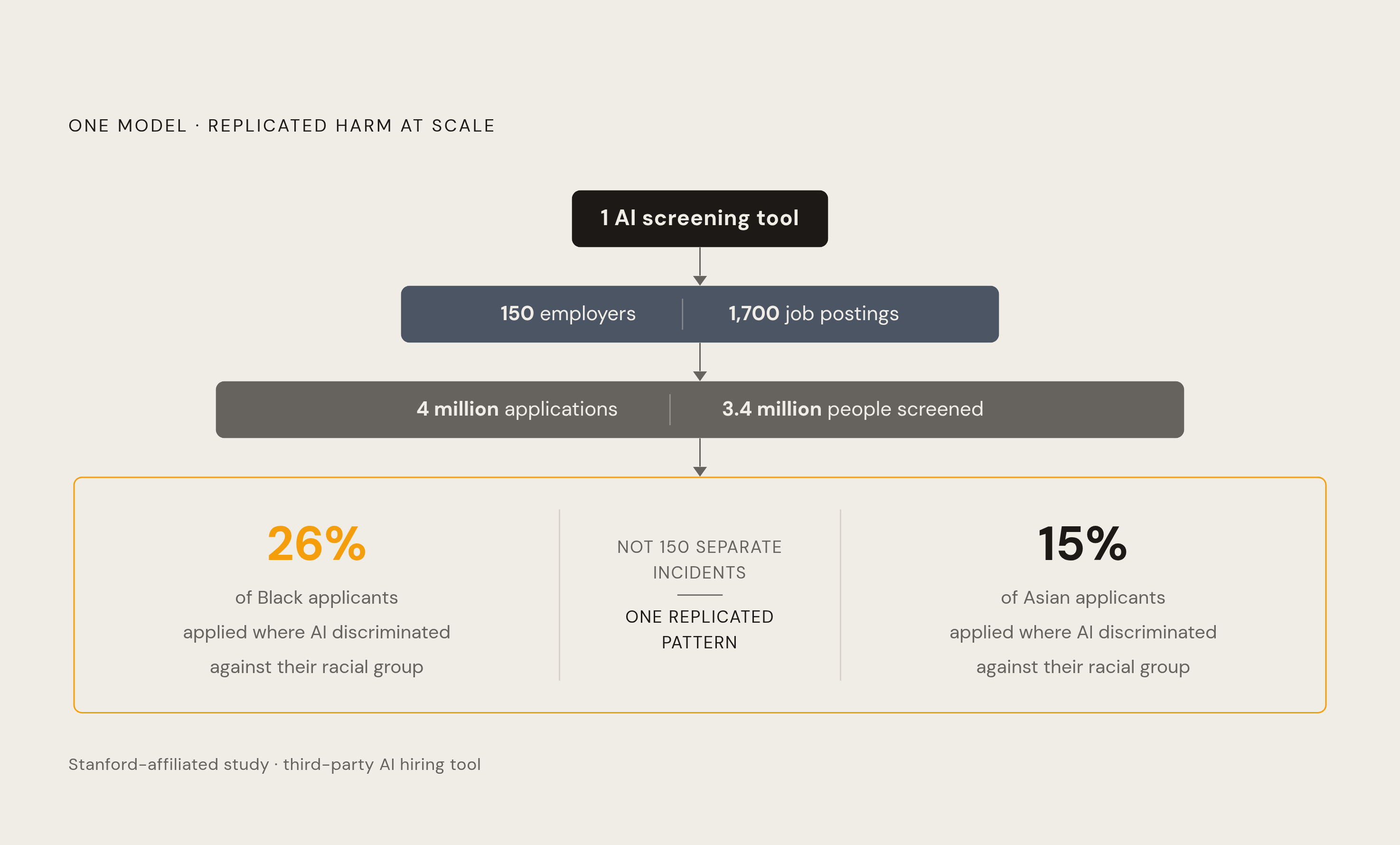
A Stanford-affiliated study puts real numbers on that reach: 3.4 million people, 4 million job applications, across 1,700 job postings, spanning 150 employers, all screened through a tool built by a single third-party vendor. The result: 26% of Black applicants and 15% of Asian applicants applied to positions where the AI system discriminated against their racial group.
Sit with that for a second. This wasn't 150 separate instances of bias, each needing its own investigation and its own fix. It was one underlying pattern, replicated across 150 employers simultaneously, because they all leaned on the same tool. That's the scale problem in a single data point: a flawed model doesn't dilute across users, it multiplies.
Newer forms of encoded bias that go beyond the training-data problem
Historical data isn't the only place bias hides anymore. Newer research is turning up bias that has nothing to do with what a model was trained on, and everything to do with how it evaluates language in the moment.
LLM self-preferencing bias is the odder of the two. Large language models now sit on both sides of the hiring transaction: applicants use them to draft resumes, employers use them to screen those same resumes. Turns out these models have a favorite author, and it happens to be themselves. Research shows LLMs consistently rate resumes generated by their own model more favorably than human-written resumes, even when content quality is held constant. That self-preference bias runs anywhere from 67% to 82% across major commercial and open-source models.
Simulations spanning 24 occupations found candidates who used the same LLM as the one doing the evaluating were 23% to 60% more likely to get shortlisted than equally qualified applicants who wrote their resumes without AI help. The gap varies across the occupations studied. There's a partial fix: targeting the models' self-recognition capabilities directly can cut this bias by more than half. But the deeper point stands. This is structural to how these models judge text that resembles their own output versus text that doesn't. It's structural to how these models judge text that resembles their own output versus text that doesn't.
Cultural and linguistic marker bias appears in a separate line of research, one built around comparing how LLMs score interview transcripts across different cultural contexts. Researchers ran 100 UK transcripts against 100 Indian transcripts, all anonymized, and the Indian transcripts still scored consistently lower. No names, no explicit demographic markers anywhere in the text. The disparity tracked back to features of language itself, not explicit identity markers.
Related findings sharpen the picture further. Wilson and Caliskan found LLM-based resume screening disadvantaged names associated with a particular racial group and female-associated names even when every other line of resume content stayed identical. Puutio and Lin ran 2,000 simulated applications through ChatGPT and turned up a preference for elite education pedigrees, along with a positional bias tied to where a candidate's information appeared in the response order.
Taken together, these findings point somewhere training data alone can't explain. The bias sits in the model's internalized sense of what "good" writing sounds like, an aesthetic and linguistic preference that encodes cultural norms invisibly, with no demographic field required to trigger it.
Synthetic data doesn't rescue this. A 2024 ACM FAccT paper, "Fairness Feedback Loops" by Wyllie, Shumailov, and Papernot, found training on synthetic data actually amplifies existing bias rather than diluting it. Teams that try to patch a biased training set with AI-generated resumes may be making the underlying problem worse, not better.
The paradox: why the same technology can reduce bias or entrench it
None of this means AI hiring tools are a lost cause. That's not the argument here, and it would be a lazy one to make. The same underlying technology that can encode bias at scale can also strip bias out, when the design gets it right.
Structured AI hiring, built around consistent criteria applied the same way to every candidate, can substantially reduce adverse impact compared to unstructured interviews. A Harvard Business Review analysis found structured AI screening cut demographic hiring gaps by 25% to 35% relative to unstructured human review.
Why does the same technology swing both ways so dramatically? Consistency is the mechanism, and consistency cuts in whichever direction it's pointed. An AI system doesn't get tired by 4 PM. It doesn't warm up to a candidate because they went to the same school or grew up in the same town, the affinity bias that creeps into so many human interviews without anyone noticing. It applies the identical rubric to candidate one and candidate one thousand alike. That's a real advantage, when the rubric itself is sound. It's a real liability, when the rubric was built on a contaminated label.
How humans interacting with biased AI inherit and amplify the model's errors
Keep a human in the loop, the standard advice goes, and a person will catch whatever the AI gets wrong. A University of Washington study puts that assumption to a direct test, and it doesn't hold up well.
Recruiters who reviewed applicants using AI tools with bias built into the underlying model ended up mirroring the AI's inequitable choices up to 90% of the time. Compare that to recruiters working without AI assistance, or with an unbiased model. Those recruiters showed markedly less disparity in their selections.
The recruiter didn't disappear from the process in either case. The presence of a biased recommendation changed what the recruiter's own judgment produced, and it changed it substantially. Lead author Kyra Wilson, of the University of Washington Information School, said: "If we can tune these models appropriately, then it's more likely that people are going to make unbiased decisions themselves." The human in the loop isn't a fixed safeguard sitting outside the system. The human is part of the system, and inherits whatever the model is carrying.
What it takes to build a hiring system that does not repeat the past
Good intentions don't fix this, and neither does a compliance checkbox signed off once and filed away. Bias must be addressed at each specific point where it has a chance to enter, otherwise it persists unaddressed.
Start with the training signal itself. What is the model actually predicting? If the answer is "hired" or "not hired" pulled from historical records, the model is predicting past human preference, dressed up as an outcome. That target variable needs to be rebuilt around performance criteria that are actually grounded in results.
Calibration isn't a one-time setup step either. What counts as "exceptional" needs to be built from real competencies and real evidence of work, tested against actual outcomes, and revisited as understanding sharpens over time. Locking that definition into a job description written once, then never touched again, guarantees the definition goes stale and starts drifting back toward old patterns.
And disparate impact analysis belongs before deployment, not after a legal complaint forces someone to look. Testing model predictions across demographic groups before candidates ever see the tool is how proxy discrimination gets caught while it's still cheap to fix. Afterward, it's a lawsuit. Beforehand, it's a design review, and one considerably easier to live with.