AI Job Description Generation and Its Effect on Candidate Pool Quality
Generic AI-written job descriptions repel experienced candidates and attract the wrong applicants.
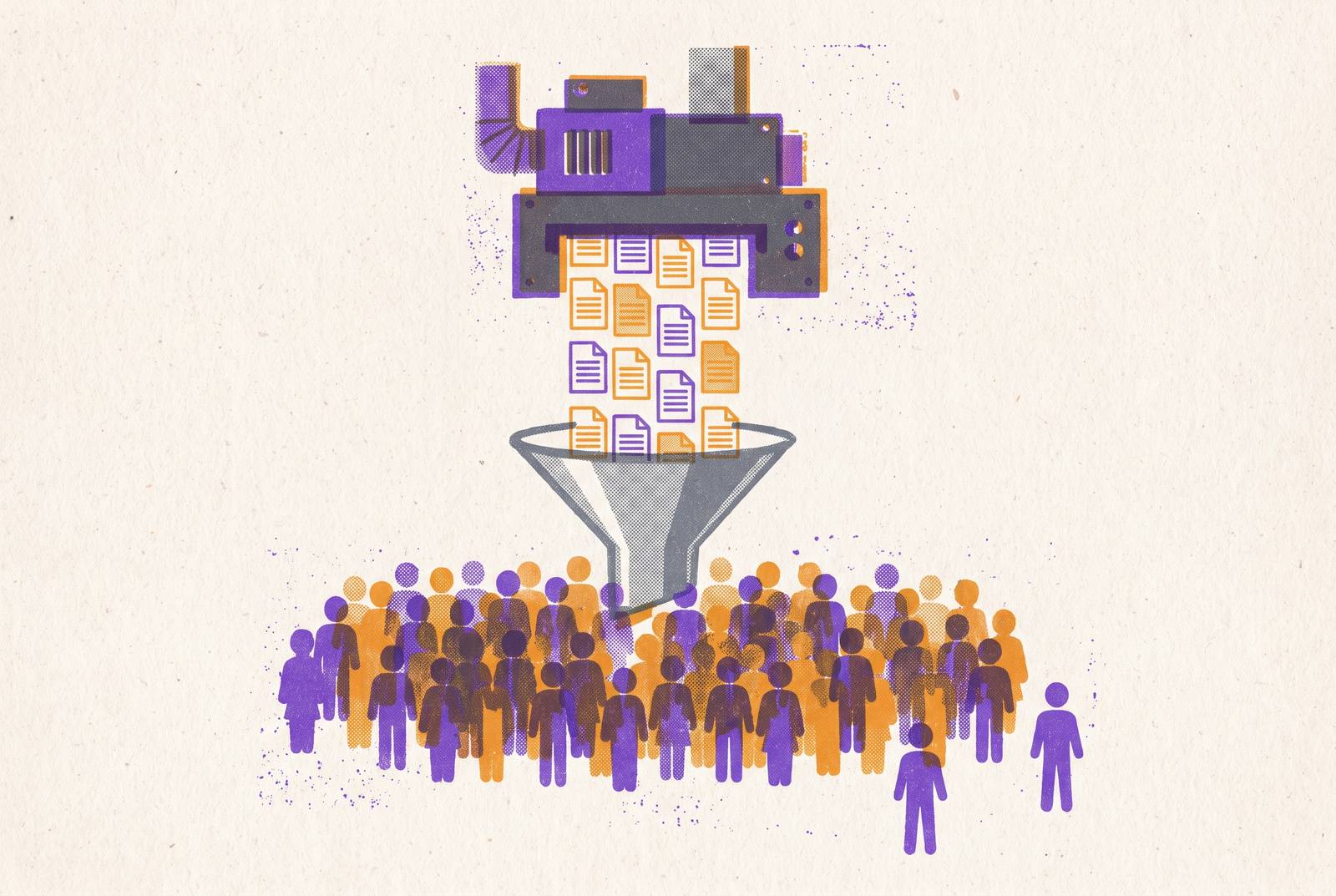
AI writes most job descriptions now, and that has become a problem hiding behind a productivity win. Recruiting teams reach for AI to draft job postings more than for any other task in the hiring process, and the descriptions coming out the other end are fast, consistent, and quietly wrong for the job they're supposed to do.
What AI tools optimize for when they generate a job description
An AI tool asked to write a job description does what it was trained to do: it studies thousands of existing postings and reproduces the genre. Not the role. The genre.
That distinction matters more than it sounds like it should. A model trained on job postings learns what a job description typically contains, section by section, phrase by phrase, averaged across everything similar it's ever seen. So it optimizes for structure. Required qualifications, nice-to-haves, a paragraph about culture, a line about equal opportunity. All present, all correctly formatted, none of it calibrated to what a specific team actually needs from a specific hire.
The output tends to run long. It repeats phrasing that appears nearly verbatim on a competitor's posting for a completely different company. And because these models average across similar listings, they can synthesize requirements into existence: a responsibility that no single source posting actually contains, stitched together from patterns across several. That's a hallucination problem wearing a job description's clothing.
Then there's word choice. Training data carries the biases baked into decades of hiring language, and a model treats "confident" and "dominant" as equivalent unless someone's told it to care. Small phrasing choices like that have measurable effects on who applies. A tool optimizing for coherence and completeness has no mechanism for noticing that.
How generic job descriptions pre-filter the candidate pool before resume review
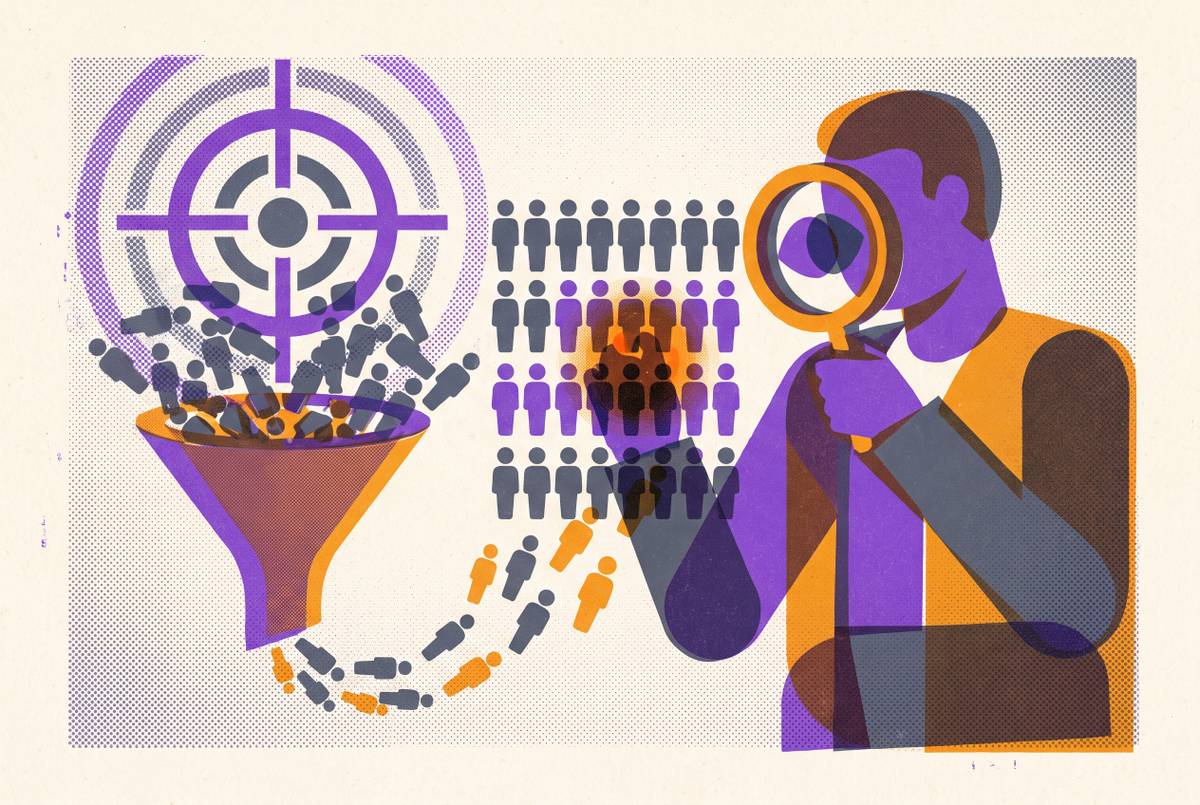
The filtering starts before a single resume gets opened.
Experienced candidates read job postings fast, and they pattern-match on language they've seen a hundred times before. Homogenized phrasing that reads like it came from a generic writing tool sends a signal, and the signal it sends is that the company hasn't thought carefully about the role. Senior people who've been through enough hiring cycles to recognize a templated posting when they see one often just skip it. Why would they invest a customized application in a company that didn't invest a customized posting?
What's left is a pool selected for tolerance of vague requirements, not for fit. That's a strange thing to optimize for by accident.
Meanwhile the other side of the funnel is getting louder. AI has made high-volume applications nearly effortless, letting candidates blast out variations of the same resume across dozens of postings in the time it used to take to write one cover letter. Entry-level roles are now seeing close to three times the application volume they saw in 2022. More applications are landing in the inbox, and less of that volume tells the hiring team anything real about who can do the work or who actually wants it. Volume goes up. Signal goes down. A hiring funnel that looks busier and performs worse at the same time is the paradox at the center of this.
The calibration gap: why most job descriptions don't describe what exceptional looks like
But how does a job description written by an AI model ever describe what excellent looks like on a specific team? It can't, structurally. The bar for excellence doesn't live in a corpus of old postings. It lives in a hiring manager's head, usually in the form of frustration about the last person who didn't clear it.
Work itself has been changing faster than most companies can write it down. AI is compressing tasks, reshaping what a team of five can accomplish versus what used to take fifteen, and raising the bar for what a single person's output is expected to look like. Job descriptions haven't caught up to that shift, and the mismatch between how roles are defined and how work is actually done is a big part of why the market feels so misaligned right now.
The outcomes make the calibration gap visible. Data and AI roles are drawing more applicants than they ever have. And yet companies openly say they can't find the right candidates, with roles sitting open for months at a time. That's a definition problem, not a supply problem. That's a definition problem.
What does strong calibration actually look like? It means defining a role by outcomes and evidence: what got built, why it mattered, what changed because of it. Not a checklist of credentials. Not a bullet list of responsibilities copied from the last posting. Evidence of impact, described specifically enough that a candidate can self-select in or out honestly.
What the talent market looks like versus what most job descriptions assume
One might argue none of this matters if the market eventually sorts itself out. It hasn't, and the data on how JDs actually get written explains why.
Only 31% of recruiting teams use labor market data to inform sourcing and hiring decisions. That means most job descriptions get written and posted with zero pressure-test against what's actually available in the talent pool. There's no check against comp benchmarks and no check against how many people with the stated qualifications even exist.
Labor market data consistently shows a substantial gap between open roles and actual hires, and job descriptions that overshoot on requirements make it worse, effectively pricing roles out of the pool of people who could actually do the work.
That raises time-to-fill. Engineering roles in a large domestic labor market. typically take somewhere between 40 and 60 days to fill. For a founder or a lean team, that's two months of a senior seat sitting empty while the roadmap waits. That's two months of a senior seat sitting empty while the roadmap waits. SHRM has benchmarked the average hiring cycle at 44 days, and most teams aren't beating that baseline. Miscalibrated job descriptions are one of the quiet reasons the cycle keeps stretching past it.
How credential-optimized matching amplifies the false-positive problem AI JDs created
Better matching technology was supposed to fix this. It's fixed part of it, and made another part worse.
Skills-based AI matching, compared to old-school title-based search, expands the eligible candidate pool by roughly 6x. That's real progress: instead of filtering on job titles that vary wildly across companies, matching systems can now surface people whose actual skills fit, regardless of what their last title happened to be. Newer hybrid models, combining transformer architectures with graph neural networks, hit F1 accuracy scores around 0.91 in controlled testing, compared to roughly 0.70 for basic cosine similarity matching. That's a meaningful jump in precision.
But 0.91 accuracy against a vague or hallucinated job description is still matching against the wrong target. If the input criteria don't reflect what a hiring manager actually wants, or if the stated requirements diverge from the hiring manager's real bar, the matching layer just gets very good at finding the wrong people, efficiently.
A creative agency's AI screening tool, trained on data that rewarded traditional career trajectories, systematically overlooked career switchers and freelancers, exactly the candidates whose adaptability the agency needed most. The bias wasn't in the algorithm's math. It was in what the training data considered a marker of success.
The industry is starting to notice. Roughly 40% of employers are actively moving away from resume-first hiring, and about 10% now favor skills-based or scenario-driven assessments over resume screening. That's meaningful movement. It also means the majority haven't made the shift, and are still running credential-optimized matching against inputs that were never calibrated.
The fix isn't a better prompt or a smarter tool, it's changing what a job description is supposed to do
So where does that leave the fix? Not in a better prompt. Not in a smarter model. The fix is in what a job description is treated as.
Right now, most teams treat a job description as a broadcast document: write it once, post it wide, optimize the keywords, move on. That's the model AI tools were built to serve, and it's exactly the model producing generic language, inflated requirements, and a candidate pool that self-selects for the wrong reasons.
The alternative treats a job description as a calibration artifact. A working document. Something that captures what a team genuinely values, gets pressure-tested against what the market can realistically supply, and gets revised as interviews reveal where the original criteria missed the mark. That's a fundamentally different object than a static posting optimized for search visibility.
This reframe also changes what AI should actually be doing in the process. Not generating the definition of the role from scratch. Sharpening a definition that starts somewhere else entirely: with the hiring manager's judgment about what the last person got wrong, what problems actually need solving, and what kind of working style survives contact with the team's real environment. No corpus of past postings contains that. Only the person running the team does.
That's the piece no amount of model scale replaces. AI can pressure-test a definition once someone's supplied it. It can't originate the definition, because the definition of excellence was never a language pattern to learn. It was a judgment call, made by someone who's watched the role fail and succeed up close, one hire at a time.