Automated Technical Assessment Reliability in Engineering Hiring
Most automated hiring assessments measure consistency.
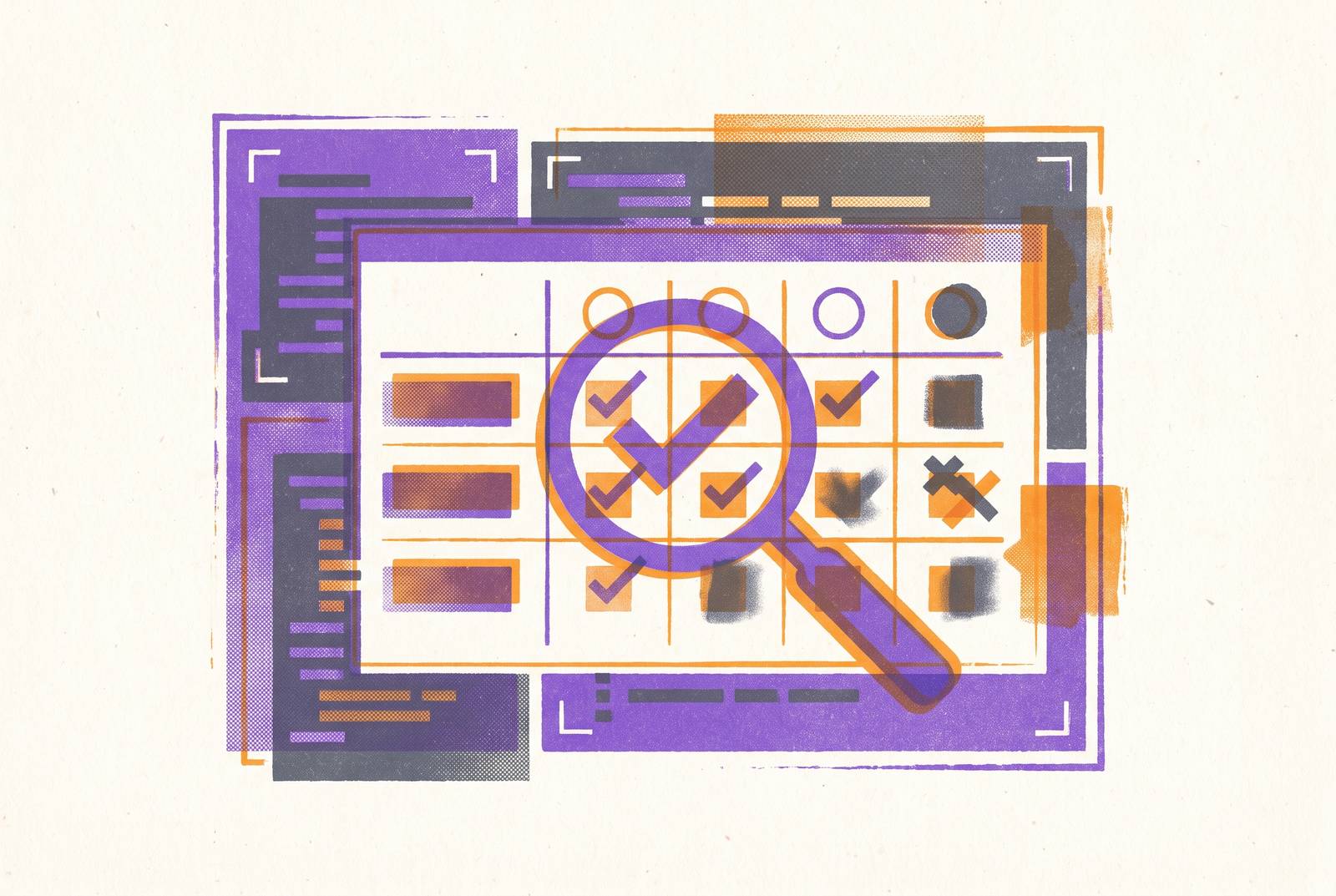
Automated technical assessments promise something engineering hiring badly needs: a fast, standardized way to screen candidates when applicant volume is high and resumes, increasingly written or polished by AI, tell you less than they used to. But the tool only works if it measures what the job actually demands, and that's where most hiring programs quietly fall apart.
What "reliability" means for a technical assessment
Most teams treat "reliability" as one question. It's actually two, and conflating them causes real damage.
The first is consistency: does the same candidate get roughly the same score if they take the assessment twice, or if two different reviewers grade the same submission? This is the easy one to solve. Standardized rubrics, automated scoring, timed sections. Most platforms are built to nail this.
The second question is harder and matters more: does a high score actually predict strong performance on the job? This is predictive validity, and it's rarely checked after the fact. Go back and pull the assessment scores for engineers hired eighteen months ago. Compare them against how those engineers actually perform now. Many hiring teams find that when they do run that comparison, the correlation can be weaker than expected.
Here's why the distinction matters in practice. An assessment can be perfectly consistent and still be reliably wrong. If it tests the wrong skills with total precision, it produces confident, defensible scores that predict nothing useful about the job. Consistency without validity is just a well-built machine measuring the wrong thing.
There's a third piece too, and it's easy to overlook: fairness. An assessment that scores different demographic groups differently for reasons that have nothing to do with job-relevant skill isn't reliable, no matter how internally consistent its rubric looks on paper.
The sections ahead walk through the specific factors that determine assessment reliability: task authenticity, calibration quality, bias governance, AI-integrity controls, and where human judgment has to stay in the loop.
How task authenticity determines whether a score means anything
An assessment built around debugging, code review, and multi-step system design produces a score that maps to something real. An assessment built around academic puzzles produces a score that maps to academic puzzle performance. Those are not the same thing, and the gap between them is where most hiring programs bleed signal.
What does an authentic engineering task actually look like?
- Project-based evaluations where the candidate makes architectural decisions, not just fills in a function
- Debugging work on an existing codebase, which is closer to what most engineers do daily than a greenfield algorithm challenge
- Multi-step problems that reveal how someone thinks iteratively, handles ambiguity, and documents their reasoning
- Version-control habits: does the candidate commit incrementally, write commit messages that mean something, structure changes so a reviewer can follow along?
Then there's the question that didn't exist a few years ago and now sits at the center of the whole conversation: can this engineer evaluate AI output critically? Spot when a suggestion is subtly wrong? Debug code that an AI model generated but got almost, not quite, right? According to Karat's survey of engineering leaders, AI is lifting average engineer productivity meaningfully, but the difference in how engineers leverage those gains varies considerably. An assessment that skips AI-fluency entirely is measuring a skill set that's no longer the bottleneck.
Authenticity isn't a platform feature, it's a match. A task that's authentic for a backend infrastructure engineer might be completely beside the point for a frontend product engineer. So the useful question to ask a vendor isn't how many questions live in their library. It's whether they can show evidence that their question types predict performance for this specific role, at this specific level.
How calibration quality sets the ceiling on assessment reliability
Two interviewers look at the same candidate. One says exceptional. The other says mediocre. Same format, same questions, wildly different conclusions, and if that happens often enough on a team, the assessment score stops meaning anything. It becomes a lottery dressed up as a measurement.
Calibration is the fix, and it requires more than good intentions. A rubric needs specific, measurable criteria, not "good communication skills" but something like "explains technical concepts to non-technical audiences, demonstrated through client-facing work." It needs behavioral anchors at every score level: a 5 on code quality means clean, well-named code that handles edge cases and would clear a senior review immediately, while a 4 means the code works, reads fine, and covers most (not all) edge cases. And it needs to be written down. Not a shared understanding that lives in people's heads, but a document everyone on the panel actually references.
Who sets that baseline matters too. The team's best engineers tend to have sharper instincts about which skills actually translate to the job than a hiring manager sitting one step removed from the technical work. Pull them into the process early.
One useful reference point here is Alan, the insurtech company, whose recruitment process runs on four stated principles: Fair, Objective, Transparent, and Effective. It's a decent illustration of calibration as an ongoing discipline rather than a rubric someone writes once and forgets.
At the staff and leadership level, though, calibration gets genuinely harder. The signals that matter most there, judgment under ambiguity, how someone operates without a predefined structure to lean on, don't fit neatly into a rubric. This is also roughly where most AI interview tools stop being useful, since they're built to score against defined criteria, not to evaluate someone navigating the absence of criteria.
And calibration isn't a one-time setup. Go back to the scores of people already hired, compare them against actual performance, and adjust the standard where the correlation is weak. Every change to that rubric should be visible and reasoned, something a human decided on purpose, not a quiet edit nobody can trace back.
How bias in automated scoring undermines reliability at scale
Testing of AI hiring tools in 2025 found that a substantial share showed measurable bias on at least one demographic dimension. That's not a rounding error. That's a meaningful portion of tools in active use producing skewed outcomes.
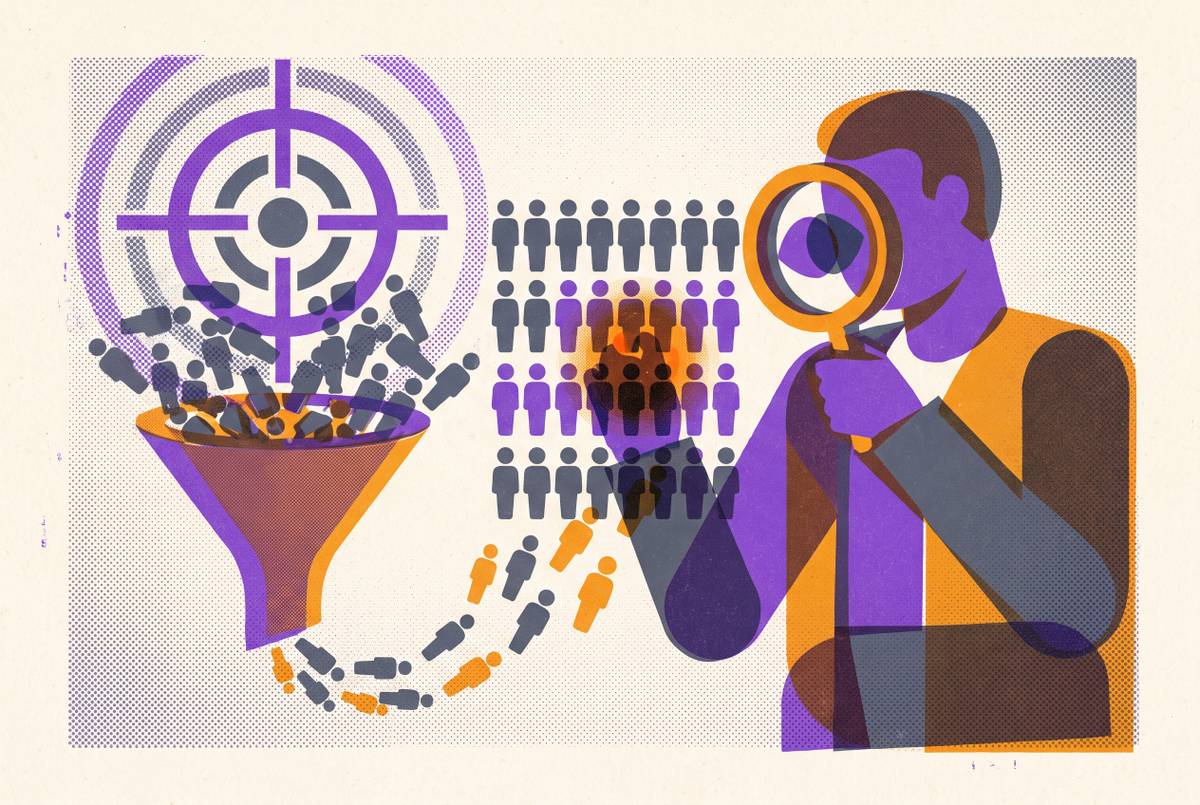
The false-negative problem is dangerous because it happens before a human ever sees the candidate. A parsing error, an overly rigid keyword match, bias baked into training data, any of these can knock a genuinely qualified engineer out of the pipeline with nobody the wiser. Nobody rejected them on purpose. The system just never surfaced them.
Credential-pattern matching is where a lot of this bias concentrates. Two failure modes occur again and again:
- Overweighting brand-name employers and elite university degrees as stand-ins for competence, which systematically undercuts strong engineers who built their skills outside the usual pipeline
- Penalizing non-linear career paths, employment gaps, or international credentials that an automated parser simply doesn't know how to read
None of this is unfixable, but it does require actually looking. A real bias audit involves a few concrete checks: selection-rate parity (comparing shortlist rates across demographic groups to catch disparate impact), false-negative sampling (pulling a sample of rejected candidates to estimate how many were actually qualified), and feature-importance review (checking which inputs are driving the score and removing anything that functions as a proxy for a protected attribute, wherever that's lawful to do).
Some industry voices argue that structured AI screening, done well, can actually reduce adverse impact compared to unstructured human review left to its own devices. That claim deserves a caveat: no clear source has been identified for the specific reduction figures sometimes cited around this. The honest version of the point is narrower. Bias in an automated tool isn't inevitable, but avoiding it takes deliberate design and ongoing auditing, not a one-time certification. An assessment without a scheduled bias audit is an unmonitored one, and procurement teams that treat SOC 2 and GDPR compliance as the finish line are often skipping the check that matters most: how often, and how seriously, is this tool b... It's just an unmonitored one, and procurement teams that treat SOC 2 and GDPR compliance as the finish line are often skipping the check that matters most: how often, and how seriously, is this tool being audited for demographic disparity?
How AI-assisted cheating changes what a technical assessment score represents
Greenhouse's AI Hiring Report puts a number on something recruiters already sensed: 91% of recruiters and hiring managers say they've spotted or suspected candidate deception, and a significant share say they're more worried about fake credentials now than they were a year ago. This has moved well past the fringe.
What does that deception actually look like day to day?
- Take-home coding tests solved by a large language model, so the format built to reduce pressure now hands candidates unlimited AI help instead
- Live coding sessions quietly coached in real time by AI running on a second screen
- Prompt overlays and voice-fed coaching during video interviews, sometimes hard to distinguish from a candidate just thinking out loud
But how does this affect the original promise of automated screening? A strong score on a traditional coding test, taken in 2026, is genuinely ambiguous. It might reflect real engineering ability. It might reflect skilled use of an AI tool. Those aren't the same skill, and the test itself, absent extra design work, has no way to tell them apart.
Some platforms have built detection layers to try. EvoHire's published methodology, for instance, looks at response-time consistency across a test, checks similarity between a candidate's answer and known AI-generated canonical answers, and analyzes audio for cadence and tone patterns that suggest someone reading an AI-generated answer aloud rather than reasoning through it live. These are useful signals. They are not proof, and they add a layer of interpretation rather than removing the ambiguity.
The bigger shift is structural. In markets where in-person hiring is more common, companies have moved noticeably away from automated code tests and take-home projects, toward in-person sessions where someone can actually watch how a candidate thinks and works through a problem. Portfolios, open-source contributions, and real project history are carrying more weight too, simply because isolated test performance has gotten harder to trust on its own.
Which points to the actual design fix. Cheat-resistant assessment in 2026 is about asking questions whose answers require reasoning that AI couldn't plausibly have produced on the candidate's behalf, not about locking down the testing environment tighter. It's about asking questions whose answers require reasoning that AI couldn't plausibly have produced on the candidate's behalf. Task authenticity and AI-integrity, at this point, have become close to the same design problem.
Where Human Judgment Must Remain in Assessment Reliability
GoPerfect's auto-triage approach offers a workable template here: auto-approve the clear matches above a set threshold, auto-decline the clear non-matches below a set floor, and send everyone in between to a human reviewer. That middle band is exactly where automated scoring is most likely to get things wrong, and exactly where human judgment earns its keep.
What can't an automated system reliably judge? A short list, but each item is a real gap:
- Judgment under ambiguity, the core competency at senior and staff levels, which doesn't compress into a rubric
- Whether a strong score reflects real skill or effective AI assistance, absent solid integrity controls
- Collaborative and cultural fit, which only really surfaces through conversation
- Candidates with unconventional backgrounds who get quietly filtered out by credential-pattern matching before anyone even looks at their work
One might argue this just means AI needs better training data or smarter models. That misses the point. The human role here isn't a temporary gap waiting to be automated away, it's judgment and relationship, the parts of hiring that are irreducibly about deciding whether this specific person fits this specific team, and then convincing them to say yes. Scheduling, ATS updates, first-pass triage: fine, let AI handle that. Deciding whether a body of past work signals fit for this team, right now, is a different category of task.
Visibility matters as much as the decision itself. Every change to a scoring threshold or an assessment standard should be something a person can point to and explain, not a black-box model update nobody remembers approving. If it's getting harder to say why a candidate moved forward or stalled, that's a reliability problem, even if the average scores on the dashboard look perfectly stable.
Deloitte's Global Human Capital Trends report notes that agentic AI can now manage entire candidate pipelines end to end. Fine. But the real question isn't whether AI can run the process. It's whether the system knows when to hand off to a person, and whether that handoff point is visible to the people accountable for the hire.
Which is really the whole argument in one line: the final call has to stay with a human. A decision this consequential about another person's career needs someone willing to stand behind it. The evidence that actually earns someone a job offer is always going to be richer than any single score a platform can generate.
A practical framework for auditing your current technical assessment for reliability
Six questions. Sit with each one honestly before moving to the next.
Task authenticity: do the assessment tasks reflect what engineers on this specific team actually do in a normal week? If a task could have appeared on a computer science exam in 2015, the assumption that it predicts anything today needs to be tested, not assumed.
Predictive validity: has anyone compared assessment scores against actual performance for engineers hired six months ago? This single exercise, run honestly, tends to reveal which parts of the rubric are earning their keep and which are dead weight.
Calibration health: do reviewers all work from the same documented criteria with behavioral anchors, or is calibration something everyone just sort of understands? And when was that rubric last checked against real performance data?
Bias governance: when was the last selection-rate parity check or false-negative audit run? Which features are actually driving the automated scores, and has anyone checked whether those features are quietly standing in for a protected attribute?
AI-integrity controls: does the current format assume candidates aren't using AI assistance? If so, what exactly is that score measuring anymore?
Human routing logic: is there a defined point where borderline candidates get routed to a human reviewer, or is the automated system making calls across the entire distribution, top to bottom?
One harder truth underlies all six questions. Knowing what "exceptional" actually looks like for a specific team is a form of taste, and taste has to get written down, tested against real outcomes, and revised every time new evidence comes in. When that standard exists only in a hiring manager's head and never makes it into the assessment design, the assessment isn't measuring what that manager thinks it's measuring.
Where does reliability actually break down, within a single tool, or in the seams between tools? Where does reliability actually break down, within a single tool, or in the seams between tools? Usually it's the seams. The rubric lives in a spreadsheet. The assessment runs on a third-party platform. The interview feedback lives in someone's memory, half-written into a message on a team chat tool. Three good pieces, no connective tissue, and that gap is exactly where calibration quietly drifts until nobody can say what a passing score even means anymore.